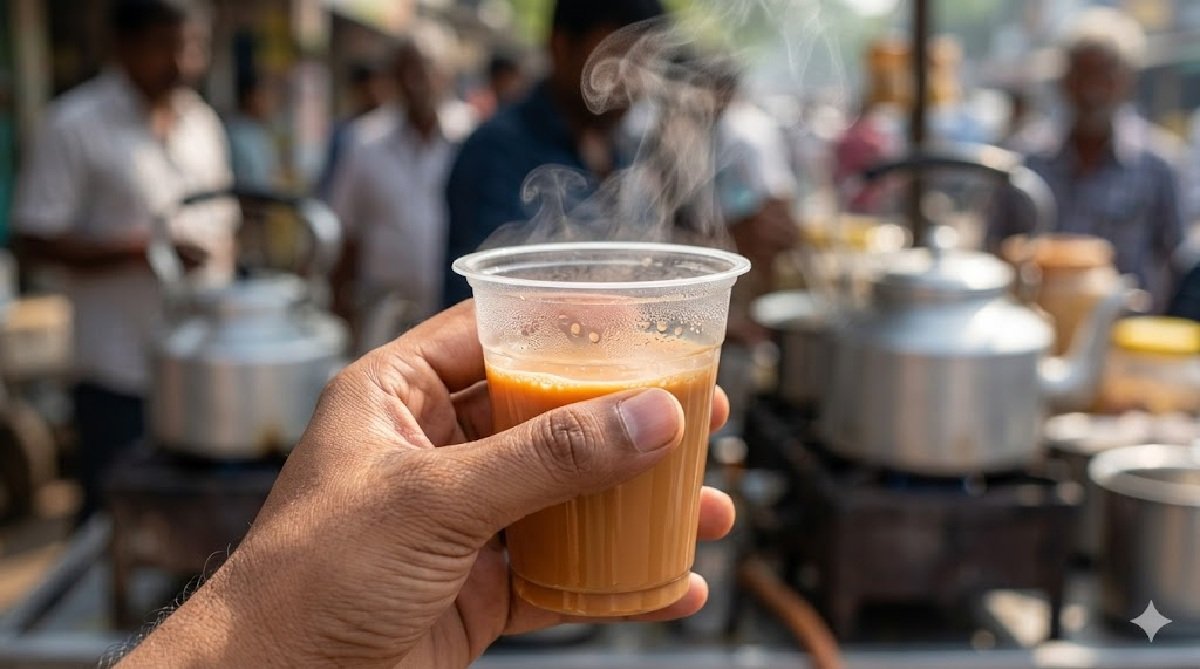
Grabbing a cup of hot tea from a roadside stall outside the office feels comforting, doesn’t it? That quick sip at your desk can be a small break in a busy day.
But here’s something worth thinking about—when that tea comes in a thin plastic cup or carry bag, it may not be as harmless as it seems.
What Happens When Hot Tea Meets Plastic?
Experts say that when very hot tea is poured into low-quality plastic, some harmful chemicals can slowly mix into the drink.
Once the temperature goes above around 60°C, substances like phthalates, bisphenol A (BPA), and styrene may start leaching into the tea.
How These Chemicals Affect the Body
These chemicals are often described as “endocrine disruptors.” In simple words, they can interfere with your body’s hormone system.
This includes hormones like estrogen, testosterone, insulin, and thyroid hormones—each of which plays an important role in daily body functions.
Now imagine having tea like this two to four times every day. Even if the amount is small each time, regular exposure may add up over time.
Some studies suggest that this kind of exposure may be linked with issues like hormone imbalance, weight gain, fatigue, sleep problems, and reduced insulin sensitivity. There are also concerns about possible long-term risks, including certain cancers, although more research is still ongoing.
What Research Is Saying
A few studies have pointed out that these chemicals may increase oxidative stress in the body, which can damage DNA. This type of damage is often studied for its possible link to serious diseases.
There’s more—research also suggests that hot drinks served in disposable cups may contain thousands of tiny microplastic particles.
What About Safety Rules in India?
According to reports, the Food Safety and Standards Authority of India (FSSAI) allows the use of food-grade plastic.
However, at the ground level, cheaper and recycled plastic is still widely used, especially by small vendors. That’s where the real concern lies.
Safer Ways to Enjoy Your Tea
Switching your cup can make a difference. Experts usually suggest choosing safer materials for hot drinks.
Glass, steel, or ceramic cups are considered better options. Even traditional clay cups (kulhads) can be a safer and eco-friendly choice.
A Small Habit, A Big Difference
You don’t have to give up your tea break. Just be a little mindful about how it’s served.
Sometimes, it’s the smallest daily habits that quietly shape our long-term health.
Medical Disclaimer:
This article is for general informational purposes only. It is not intended to replace professional medical advice, diagnosis, or treatment. Always consult a qualified healthcare provider if you have any health concerns.
1 thought on “Hot Tea in Plastic Cups? This Everyday Habit Might Not Be as Safe as You Think”